15 Front Yard Landscaping Australian Ideas for Stunning Curb Appeal
Australian front yards feel different. The light hits harder, the plants grow tougher, and the outdoor lifestyle shapes every design choice. I noticed this when I started paying attention to homes across coastal suburbs and dry inland towns. Lawns looked intentional, gravel zones felt stylish, and native plants stole the show.
Smart front yard landscaping Australian style focuses on durability, low water use, and strong structure. It still looks warm and welcoming. You don’t need a massive budget or a designer. You need practical upgrades that fit the climate and modern tastes.
Let’s walk through features and design approaches that work beautifully in Australian front yards and feel achievable for real homeowners.
1. Native Plant Front Garden Beds
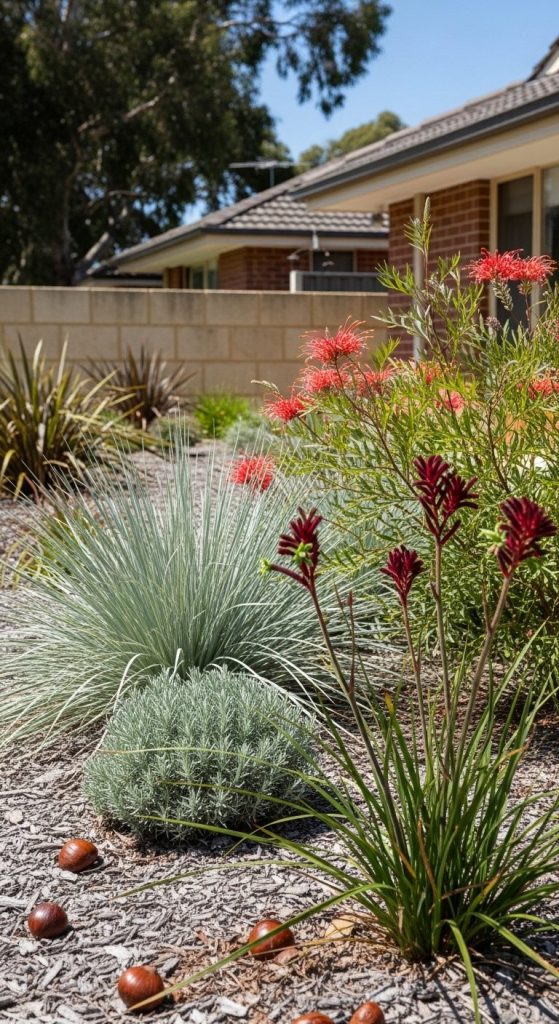
Native Australian plants thrive in heat, drought, and poor soil. Kangaroo paw, grevillea, and lomandra create texture and color without constant watering.
These beds feel natural and modern at the same time.
Pros
- Low water and maintenance
- Supports birds and pollinators
- Resilient in harsh climates
Cons
- Limited color palettes in some regions
- Requires plant knowledge
Mini takeaway: Native beds save time and money while looking authentically Australian.
Fact: Australian native gardens can reduce irrigation use by up to 60% compared to traditional lawns, according to water conservation agencies.
2. Drought-Tolerant Lawn Alternatives
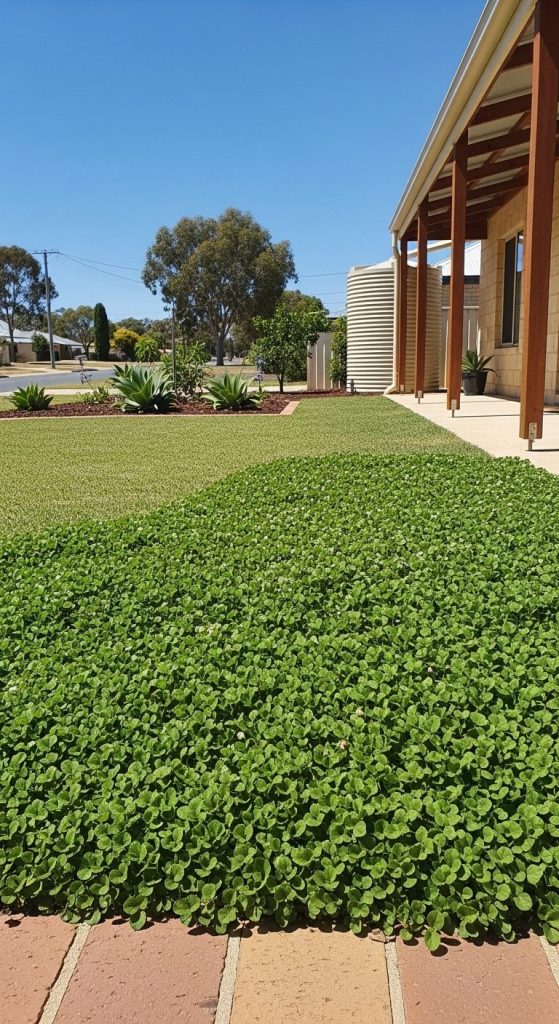
Many Australians swap traditional lawns for drought-tolerant turf or groundcovers like dichondra or native grasses. These options handle heat and reduce watering.
They still give that green front yard feel.
Pros
- Lower water bills
- Less mowing
- Stays green longer in summer
Cons
- Higher installation cost
- Slower to establish
Mini takeaway: Lawn alternatives look fresh without constant upkeep.
3. Gravel and Pebble Front Yard Zones
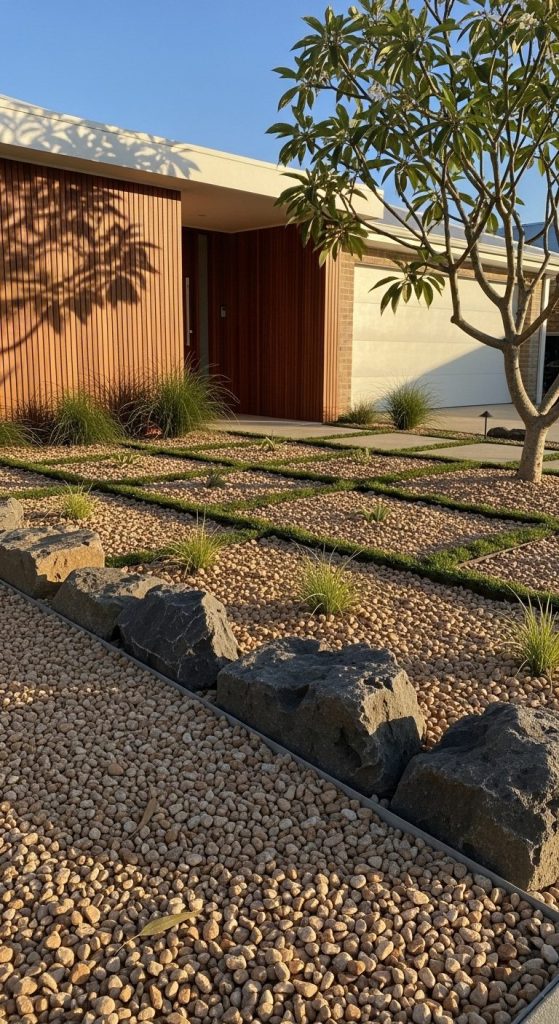
Gravel zones suit dry climates and modern architecture. They reduce watering and maintenance while adding texture.
Use compacted base layers for stability.
Pros
- Minimal maintenance
- Great drainage
- Modern aesthetic
Cons
- Weed control needed
- Stones can shift over time
Mini takeaway: Gravel zones solve water and maintenance issues at once.
4. Curved Planting Beds With Defined Edges

Curved beds soften the front yard and guide the eye naturally. Crisp metal or concrete edging keeps everything neat.
This design fits both coastal and suburban homes.
Pros
- Organic flow
- Easy mowing around edges
- Professional landscape look
Cons
- Requires precise layout
- Edging materials cost extra
Mini takeaway: Curves add movement and visual interest.
5. Feature Native Tree as a Focal Point
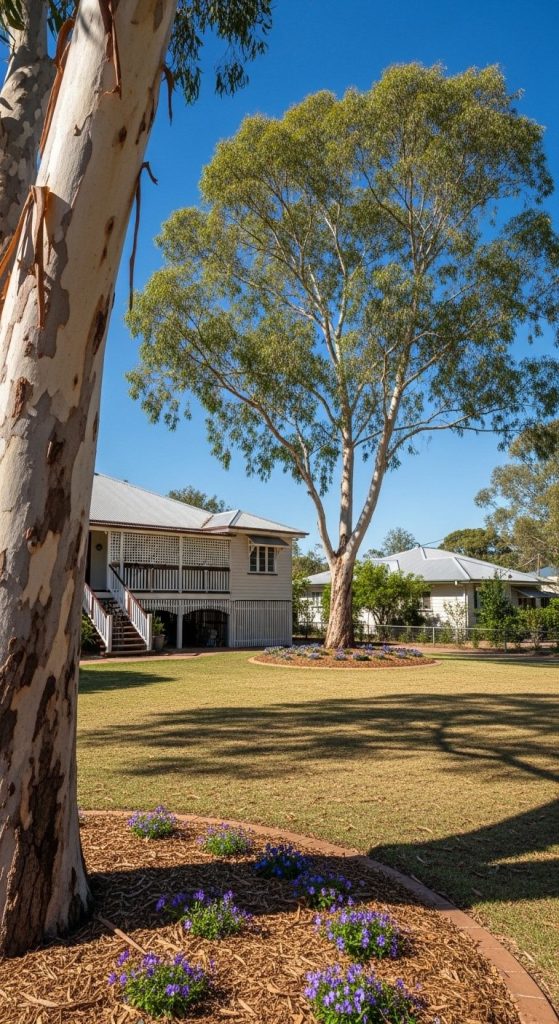
A single standout tree anchors the front yard. Options like eucalyptus, paperbark, or bottlebrush suit Australian climates.
Place it where it frames the home or entry.
Pros
- Provides shade and structure
- Boosts property value
- Seasonal interest
Cons
- Takes years to mature
- Root planning required
Mini takeaway: One strong tree beats many random shrubs.
6. Layered Shrub and Grass Planting
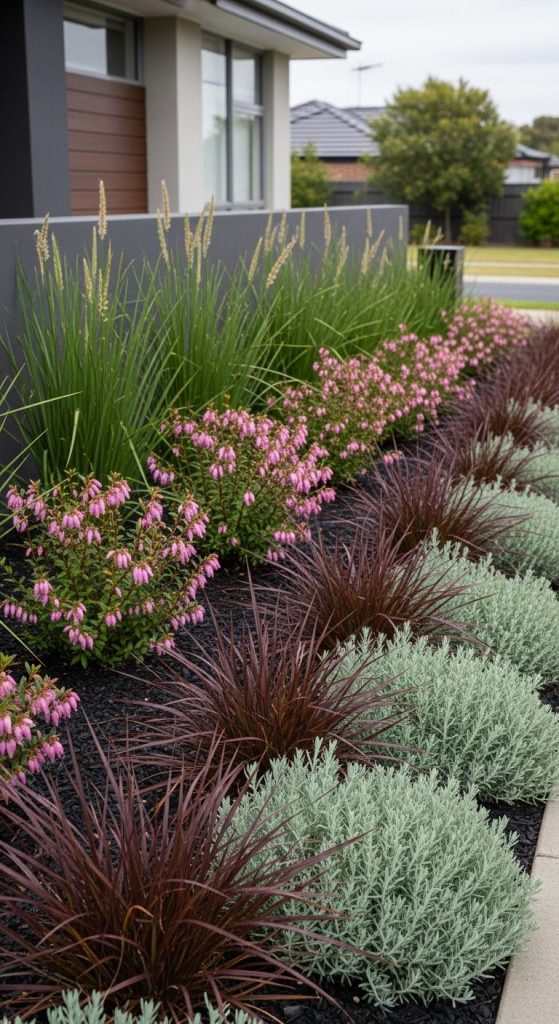
Layering grasses, shrubs, and low groundcovers adds depth. This approach suits modern Australian landscapes.
It creates a designer look without complex layouts.
Pros
- Adds dimension
- Easy to maintain
- Works in small and large yards
Cons
- Needs pruning
- Plant selection matters
Mini takeaway: Layers create that magazine-style landscape feel.
Fact: Landscape designers recommend layered planting to improve visual depth and ecological diversity.
7. Concrete or Stone Stepping Pathways

Stepping stones or concrete pads guide visitors through the front yard. They feel minimalist and functional.
Space them evenly for safety and flow.
Pros
- Clear movement path
- Modern visual appeal
- Easy DIY option
Cons
- Requires leveling
- Material costs vary
Mini takeaway: Pathways organize the yard and improve usability.
8. Low Retaining Walls for Sloped Front Yards
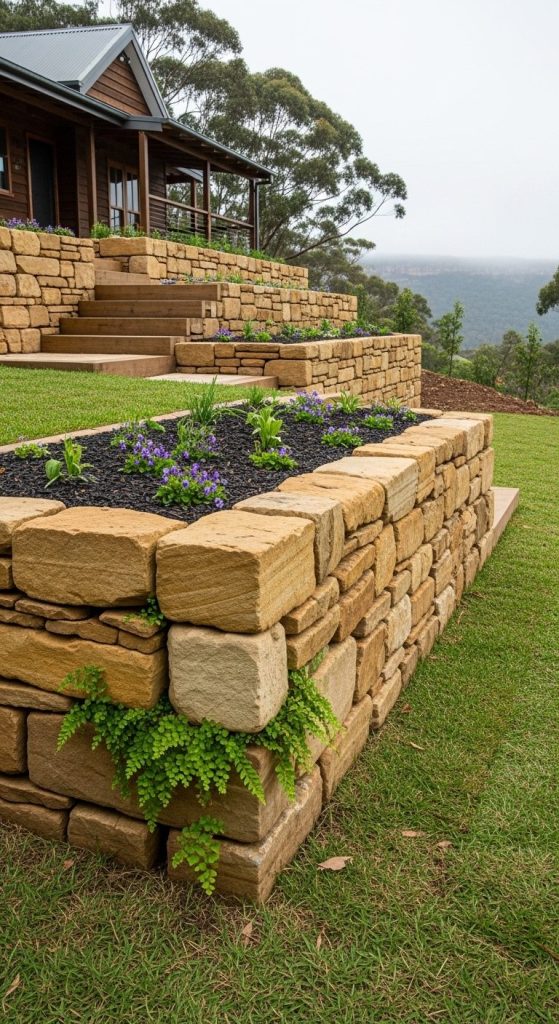
Many Australian homes sit on slopes. Low retaining walls create flat planting zones and prevent erosion.
Use concrete blocks, stone, or brick.
Pros
- Stabilizes soil
- Adds structure
- Creates tiered planting areas
Cons
- Labor-intensive
- Professional help may be needed
Mini takeaway: Retaining walls turn slopes into design features.
9. Minimalist Hardscape Zones Near the Entry

Hardscape zones near the front door keep mud and dirt away. Concrete, pavers, or stone create clean entry areas.
This suits modern Australian architecture.
Pros
- Reduces maintenance
- Clean and practical
- Enhances modern look
Cons
- Heat retention in summer
- Installation cost
Mini takeaway: Hardscape near the entry keeps the front tidy and functional.
10. Defined Driveway Planting Strips
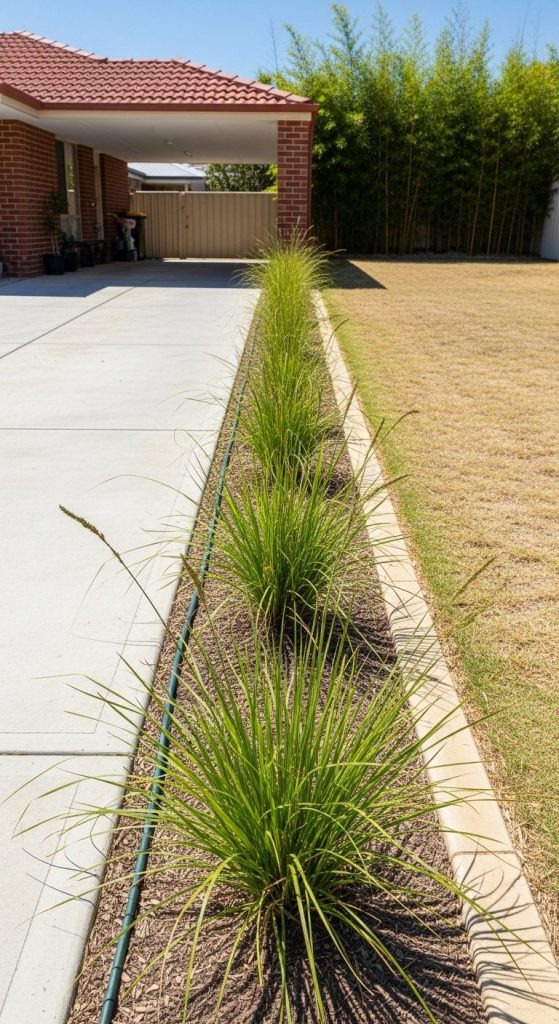
Planting strips along driveways soften concrete and asphalt. Use hardy grasses or shrubs that tolerate heat.
This adds greenery without blocking access.
Pros
- Softens hard surfaces
- Improves curb appeal
- Low maintenance plants available
Cons
- Heat stress on plants
- Requires irrigation planning
Mini takeaway: Green strips make driveways feel intentional.
Fact: Urban design studies show greenery near driveways reduces heat buildup and improves perceived home value.
11. Coastal-Inspired Sand and Plant Mix

Coastal Australian homes often use sand, gravel, and hardy plants like coastal rosemary and succulents. This creates a beachy, relaxed look.
It suits seaside climates perfectly.
Pros
- Salt-tolerant plants
- Low water use
- Unique aesthetic
Cons
- Limited plant variety
- Sand movement in wind
Mini takeaway: Coastal landscaping feels effortless and climate-smart.
12. Formal Symmetrical Garden Layout
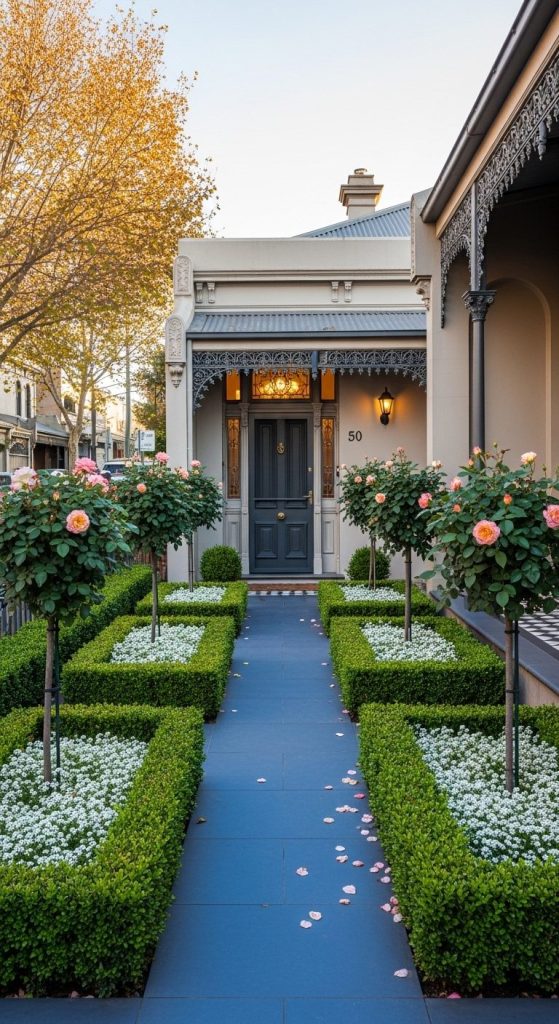
Symmetry suits classic Australian homes. Matching beds, shrubs, and pathways create a balanced front yard.
This approach feels neat and timeless.
Pros
- Organized appearance
- Easy to maintain layout
- Strong curb appeal
Cons
- Less flexible design
- Requires consistent upkeep
Mini takeaway: Symmetry signals care and quality.
13. Small Front Courtyard Style Layout
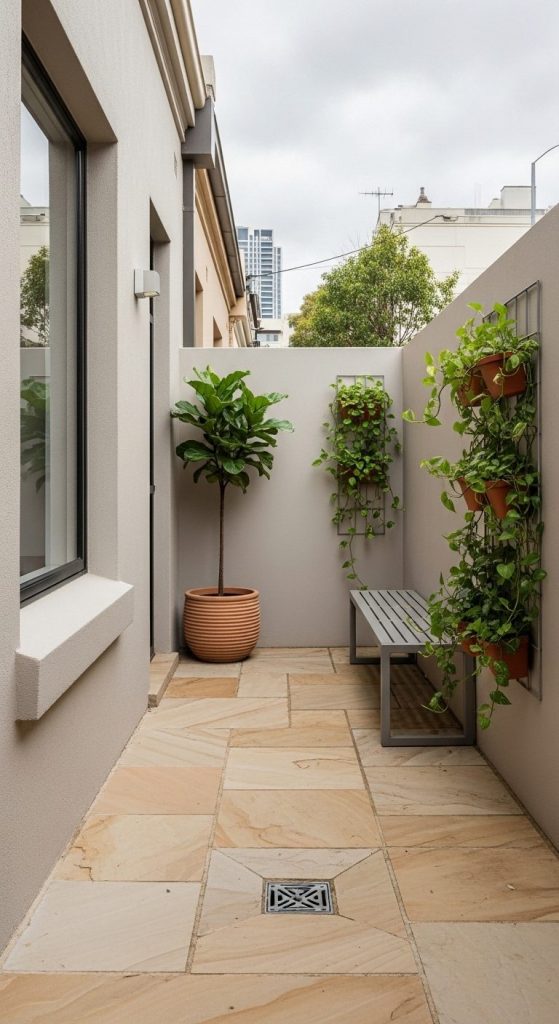
Courtyard-style front yards use paving, planters, and defined zones. They suit urban Australian homes with limited space.
This creates a private and structured feel.
Pros
- Maximizes small spaces
- Easy to maintain
- Adds functional outdoor area
Cons
- Higher paving cost
- Less greenery space
Mini takeaway: Courtyard layouts make small yards feel intentional.
Fact: Compact courtyard landscapes increase usable outdoor space and property appeal in urban housing.
14. Minimal Plant Palette With Repetition

Repeating a few plant types across the yard creates cohesion. Australian modern homes often use grasses, shrubs, and a single tree type.
This reduces visual clutter.
Pros
- Clean and modern look
- Easier maintenance
- Strong visual identity
Cons
- Less plant diversity
- Planning required
Mini takeaway: Fewer plant types often look more expensive.
15. Rainwater-Friendly Landscape Design
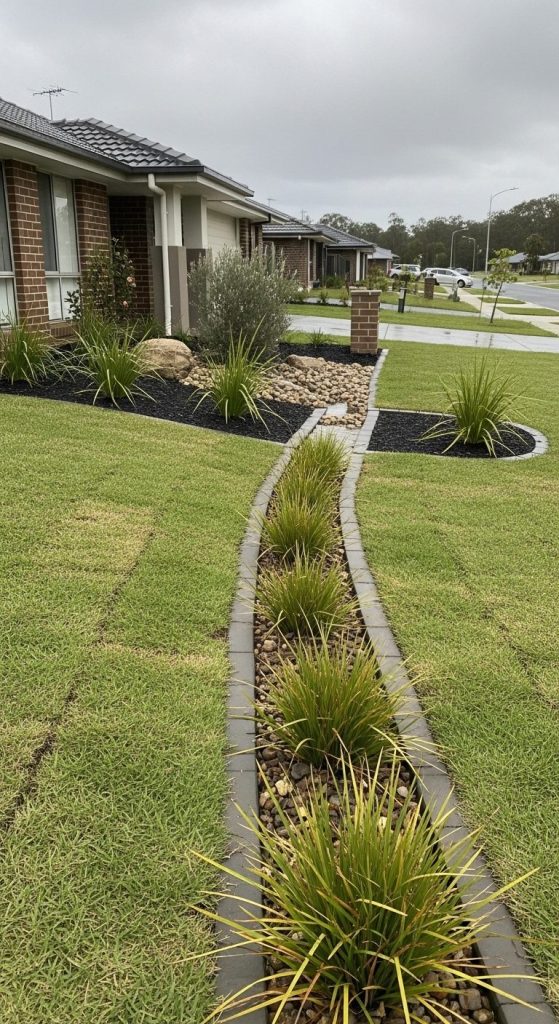
Designing slopes, beds, and surfaces to direct rainwater toward plants reduces irrigation needs. Swales and permeable surfaces help.
This suits Australian water-conscious homes.
Pros
- Reduces water bills
- Improves plant health
- Eco-friendly design
Cons
- Planning and earthworks required
- Initial labor effort
Mini takeaway: Smart water flow design saves resources and effort.
Fact: Australian water authorities promote rainwater-harvesting landscapes to cut household irrigation demand.
CONCLUSION
Australian front yards tell a story about climate, lifestyle, and smart design choices. Thoughtful front yard landscaping Australian style blends native plants, hardscapes, and structured layouts to handle heat and drought while still looking stylish.
I love how a few strategic upgrades—like layered planting or gravel zones—transform a front yard without massive effort. You don’t need everything at once. Start with one idea that fits your climate and budget, then build from there. Over time, your front yard will feel intentional, modern, and uniquely Australian.

William Martin is a passionate bowler who spends most of his weekends playing the sport. With years of intense experience under his belt, William decided to share his knowledge by creating BOWLING OCEAN. Join me on this journey to explore the world of bowling and discover the tips and tricks to becoming a pro.